
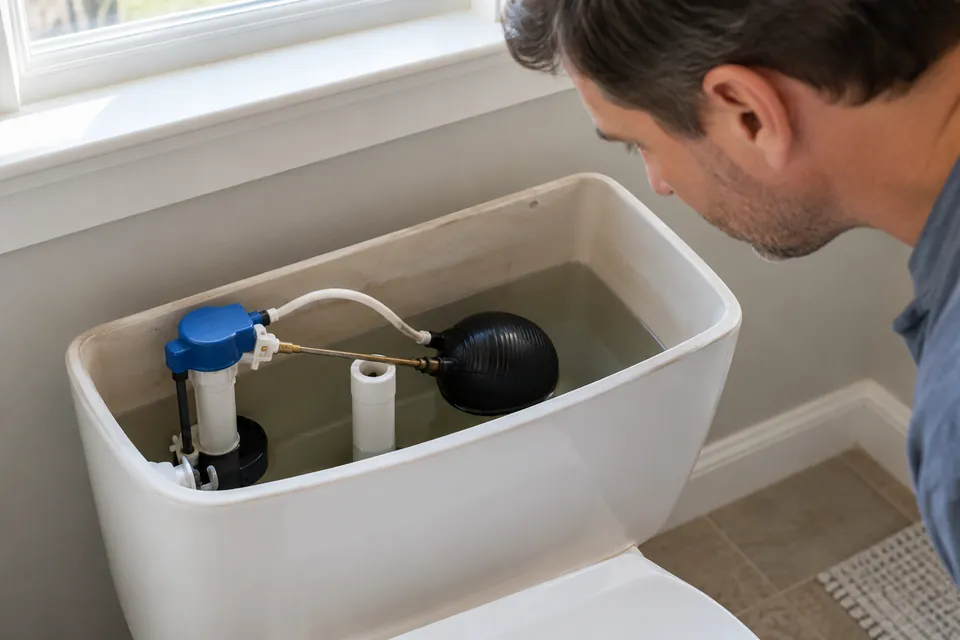
Empty, slow to fill, or unable to hold water?
Listen after one normal flush, provided the bowl is not backing up. No refill sound is different from a steady trickle, and both differ from water entering continuously without the tank reaching its usual level. Tell the provider which pattern you noticed. Do not keep flushing to test a toilet that is rising or overflowing.
Check whether the problem is limited to this toilet
Notice whether nearby taps have their usual flow. If water is absent elsewhere too, explain that when arranging help; the scope may extend beyond the fixture. If this began immediately after plumbing work or a shutoff, mention the timing. A change after work is a clue, not proof that a particular component failed.
Look without disconnecting anything
With dry hands and a safe place for the lid, you can observe the tank without moving parts. Note a float that appears caught, a visibly kinked supply connector or water entering the overflow. Do not loosen a connector under pressure, force a valve or remove a fill-valve cap with the supply on.
Why a fill valve may need attention
A provider may examine the fill valve and the supply path when a tank refills slowly or not at all. Manufacturer guidance identifies debris and valve wear as possible reasons for restricted filling. Cleaning or replacement procedures depend on the installed valve; a generic adjustment is not suitable for every toilet.
What to record before the call
Say whether there is no water entering or a slow refill, whether other fixtures work, and whether the problem followed a shutoff or repair. A readable model number helps with part identification. If the connector or shutoff is also leaking, use our toilet valve and supply-line page to describe that separate concern.
What a successful repair should address
Ask the provider to check that the tank refills, stops at the manufacturer’s intended level and does not leak at the disturbed connections. The goal is reliable operation, not simply making water enter faster. Tell them if the bowl also seems unusually low, because bowl refill and tank refill are related but different observations.
Helpful product reference · optional DIY considerations
Parts and tools worth checking
These products are examples to compare after identifying the problem. Not every toilet needs a new part, and a product listing is not a diagnosis or substitute for a suitable professional.
Affiliate disclosure: The links below are paid Amazon links. We may earn a commission from qualifying purchases at no additional cost to you.
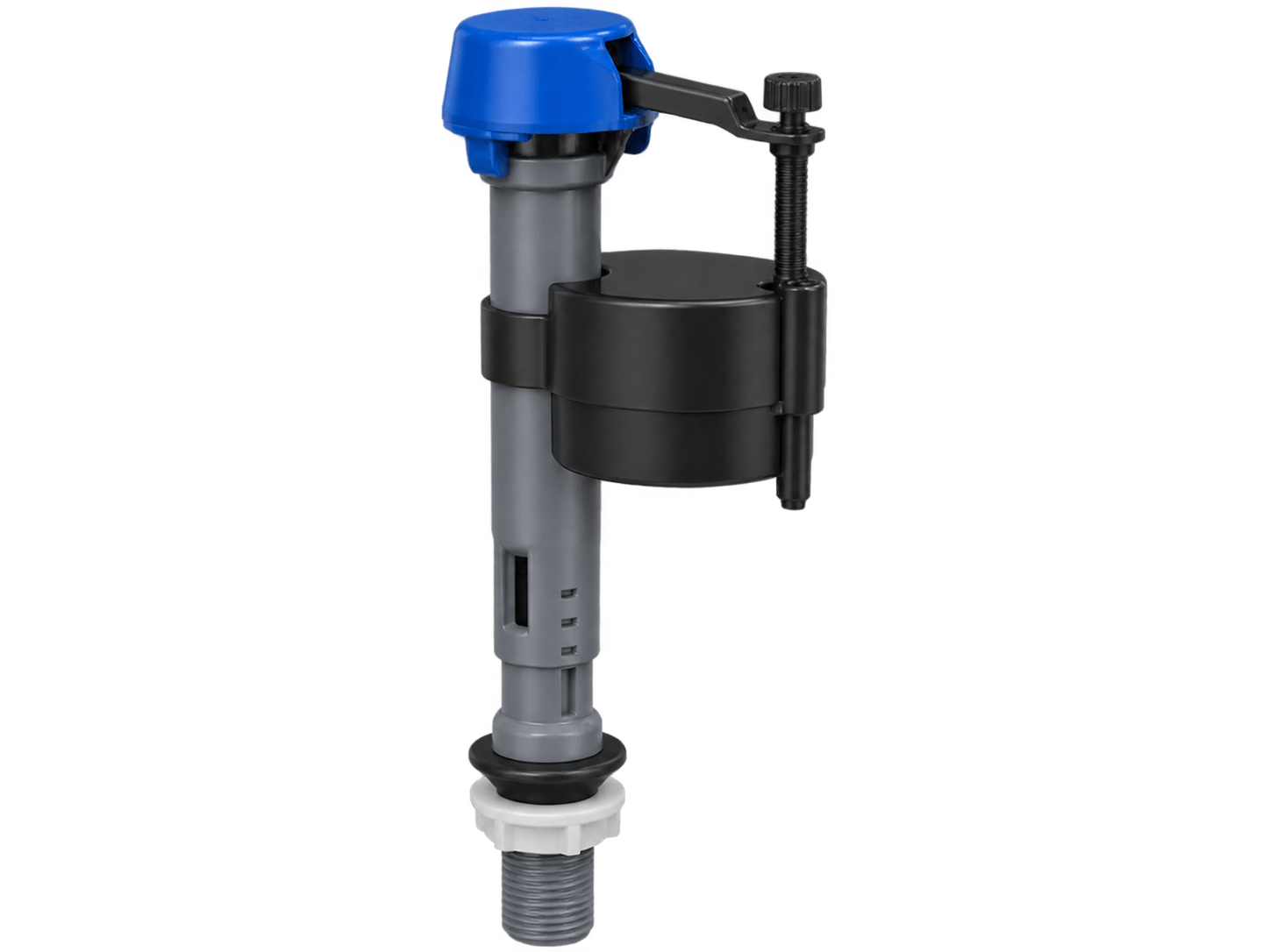
Fill valve
Fluidmaster 400H Universal Toilet Fill Valve
A replacement option if an inspection identifies the fill valve as the cause of slow or absent tank refill.
Check the toilet make, height and supply connection before ordering.
See on Amazon ↗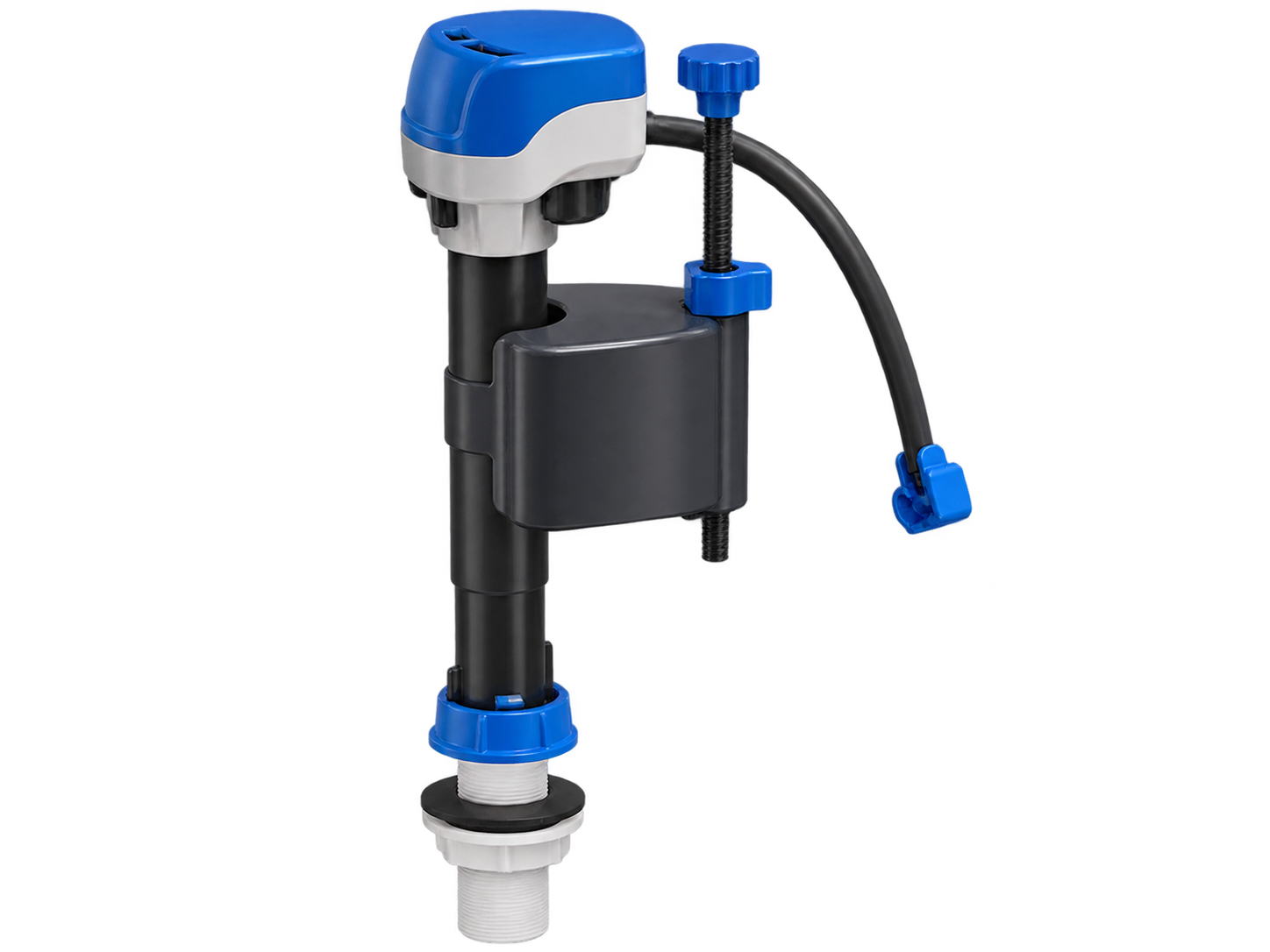
Alternate fill valve
Korky QuietFILL Platinum 528MP Toilet Fill Valve
A second fill-valve model worth comparing to the existing assembly when refill noise or slow filling is involved.
Compare manufacturer installation instructions; the two alternatives are not both needed.
See on Amazon ↗Illustrations are original diagrams, not Amazon product photos. Check current product details and compatibility on Amazon and with the fixture manufacturer. Fix Up Bath remains an independent referral service.
Questions homeowners ask
Is slow filling the same as a running toilet?
No. Slow filling describes how water enters. A running toilet can also involve water escaping or a valve failing to shut off.
Should I turn a stiff shutoff harder?
No. Do not force a corroded or stuck valve. Tell the provider it cannot be operated normally.
Can I remove the fill-valve cap while water is on?
Do not dismantle a pressurized valve. Follow the installed model’s instructions or arrange professional help.
What if all the taps also have little water?
Report the wider water-supply symptom. It should not be treated as an isolated toilet fault without evaluation.
Do I need a new toilet?
Failure to refill alone does not establish that the fixture needs replacement. Have the supply and tank components assessed first.
Manufacturer and consumer resources
Use instructions for your actual fixture and valve model. These resources provide additional context.
General homeowner information, not a diagnosis of your fixture. Photos are illustrative scenes, not providers available through this website.